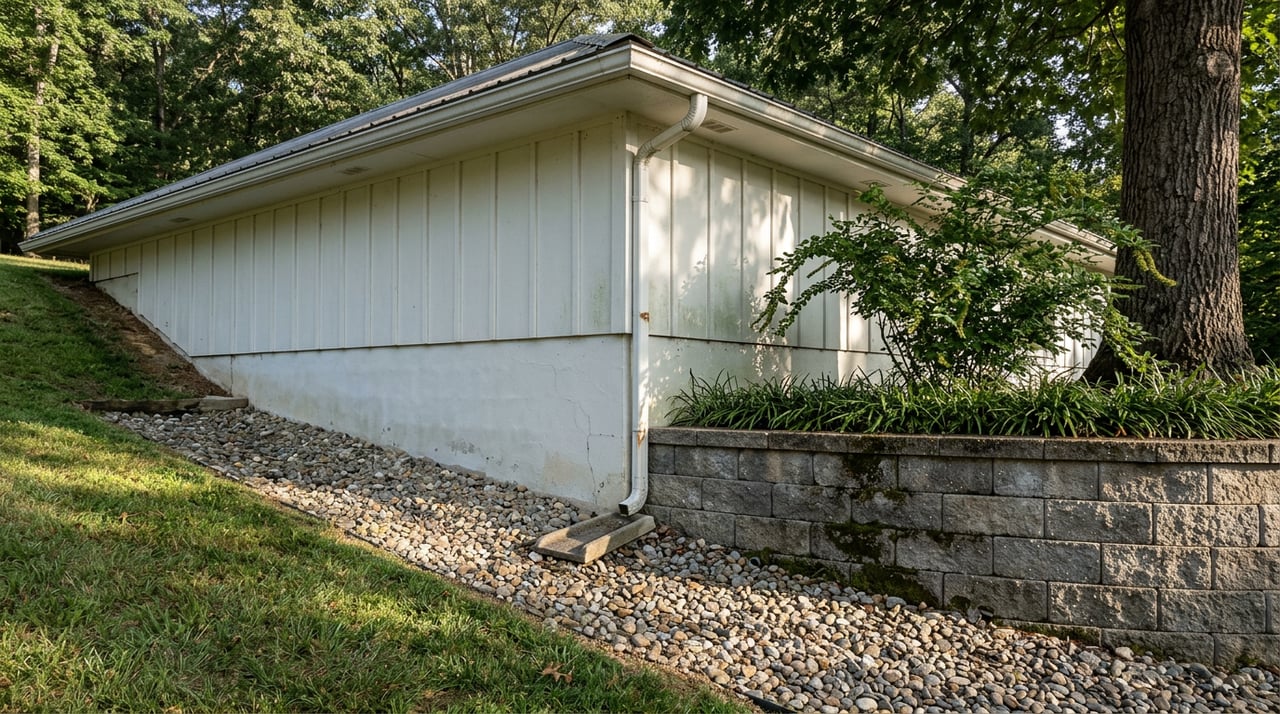
The inspection report comes back clean. Roof, foundation, plumbing, electrical, all checked and signed off. The seller's disclosure form has no red flags either, nothing checked in the drainage or settling boxes. Everyone signs. Six weeks later, after the first hard spring rain, water is standing against the foundation wall in a spot nobody looked at, because nobody was required to.
That gap between what gets inspected and what a hillside lot can actually do is the thing worth understanding before you buy or sell in Red Bank, not after.
Why This Neighborhood Sits Different
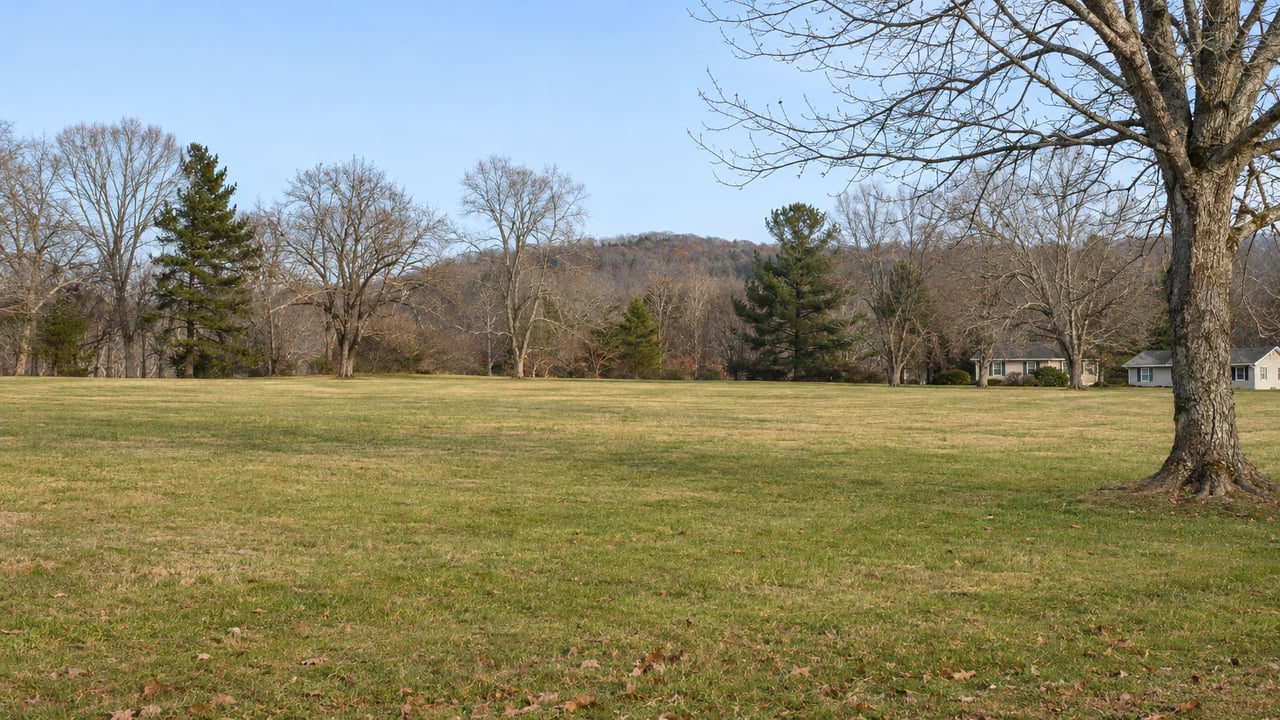
Red Bank isn't flat, and it isn't flat in a way that shows up in how homes are built here. The city sits on Stringer's Ridge, and residential lots here commonly carry an incline of 15 percent or more, with parcels running from a half-acre to a full acre, larger than the typical suburban lot precisely because so much of that acreage is the slope itself, not usable yard. Stringers Branch, the waterway that runs near Dayton Boulevard, is a mapped flood hazard zone, which means properties built, maintained, and insured along that corridor carry an added layer of drainage consideration that a buyer looking at a listing photo would never guess.
None of this makes Red Bank a risky place to buy. It makes it a place where the site itself, not just the structure sitting on it, is part of what you're purchasing. And the site is exactly the part that standard transaction tools are least equipped to evaluate.
What an Inspection Actually Looks At
A home inspection is built around the structure. Inspectors evaluate the foundation, roof, HVAC, electrical, plumbing, and exterior elements, and they check drainage where they can see it and where it's accessible during a one-time visit. That's the operative limit. An inspector walking a Red Bank lot on a dry October afternoon has no way to observe how water moves across that slope in a March downpour, because the water isn't there to observe. The inspection captures a snapshot of a static structure. It was never designed to model how a graded hillside behaves under six inches of rain.
Local inspection companies serving the Chattanooga area are candid about this. Firms doing work in Red Bank describe checking drainage "where accessible" as a matter of course, and describe local risk as shaped by terrain and weather patterns rather than by the house alone. That's not a knock on the inspection process. It's a description of what the process is actually built to do, which is different from what a hillside buyer sometimes assumes it does.
Inspection, Disclosure, and What Neither One Catches
It helps to lay this out plainly, because the two documents a buyer relies on most cover different ground, and the space between them is where hillside surprises live.
| What it covers | What it misses on a slope | |
|---|---|---|
| Home inspection | Structure, systems, visible drainage at time of visit | Water behavior during actual storm events, subsurface grading problems |
| Seller disclosure | Defects the seller actually knows about, according to PropCash | Any drainage issue the seller never personally experienced |
| Neither | Grading conditions that only appear under specific weather, previous owners, or heavier rainfall than the current owner has seen |
That third row is the one that matters most in Red Bank. A house can pass both the inspection and the disclosure honestly, and still hand the new owner a drainage problem that simply hadn't announced itself yet under the previous owner's watch.
The Disclosure Form Isn't Hiding Anything. It Just Can't Ask What the Seller Doesn't Know.
Tennessee's Residential Property Disclosure Act requires sellers of one to four unit residential property to give buyers a written statement of known material defects before the contract becomes binding. The standard form, RF 201, walks through structure, foundation, and settling or drainage concerns. But the law is explicit on one point: sellers answer based on their actual knowledge, and nothing in the statute requires them to hire an inspector, open up walls, or go looking for problems they have no reason to suspect.
That's not a loophole. It's the honest design of a disclosure system built around what a person can reasonably be expected to know about their own home. The trouble is that a hillside lot can carry a drainage weakness that never surfaces during one owner's tenure, especially if that owner happened to live through a run of dry years, and then surfaces hard during the first unusually wet season under new ownership. The seller who signs that form isn't lying. They genuinely didn't know. The buyer still inherits the water.
According to Houzeo, Tennessee gives buyers roughly one year from disclosure or closing to bring a claim if they can prove a seller knew and withheld something, but that legal window doesn't help much when the honest answer really was "we never saw it do that."
What Shows Up on the Bill When the Hill Wins
When a drainage or grading issue on a Red Bank lot does surface, the fix isn't abstract. Local grading and excavation contractors describe Red Bank properties as needing careful drainage planning almost as a matter of course, citing the combination of rolling terrain near Stringer's Ridge and clay-heavy soils that hold water rather than absorbing it. One local concrete contractor's own Red Bank pricing breaks the terrain premium into real numbers: valley-floor lots near US-27 pour at standard flatwork rates, but lots climbing toward Signal Mountain add cut-and-fill work, retaining structure, and steeper access to the job, running two to six dollars per square foot above the level-site baseline, and jobs that hit shallow bedrock can land in an eight to eighteen dollar per square foot band depending on how much rock stands in the way.
National cost guides put more general numbers around the pieces that typically follow a drainage discovery. Regrading around a single side of a foundation runs roughly five hundred to a thousand dollars, with a full perimeter regrade closer to one to three thousand. A French drain installation to carry water away from a foundation or retaining wall typically runs ten to thirty-five dollars per linear foot. None of that is catastrophic on its own, but it's also not the kind of line item most buyers budget for in the excitement of closing week, and it tends to arrive at the worst possible time, right after move-in, right after the moving truck bill.
What This Means If You're Buying
The fix here isn't to distrust Red Bank's terrain. It's to ask questions that a standard inspection and disclosure form structurally can't answer on their own.
- Ask how long the current owner has lived there and whether they've seen the property through a genuinely wet spring, not just an average one.
- Walk the yard yourself after a rain if your timeline allows it, or ask your inspector directly whether the grading around the foundation showed any negative slope, standing water, or erosion patterns on inspection day.
- If the lot backs up to a steep grade or sits near Stringers Branch, consider a second opinion from a local grading or excavation contractor before your due diligence period closes. That's a few hundred dollars against a problem that can run into the thousands.
- Read the disclosure form's drainage and settling section closely, and if a box is checked "unknown" rather than "no," treat that as information, not just paperwork.
What This Means If You're Selling
Because Tennessee's disclosure law only asks what you actually know, you're not required to go digging for a grading problem that's never shown itself. But a pre-listing walk of the property during or right after a hard rain, or a quick conversation with a local grading contractor before you list, can surface something worth fixing on your terms rather than the buyer's. It also gives you language for the disclosure form that reflects genuine diligence, which matters if a dispute ever comes down to what you knew and when you knew it.
A Few Questions Worth Asking Before You Sign Anything
Does a standard home inspection check yard grading? Inspectors evaluate drainage where it's visible and accessible at the time of the visit, but they can't observe how a slope behaves under storm conditions that aren't happening that day.
If a drainage problem shows up after closing, is that the seller's fault? Only if the seller actually knew about it and didn't disclose it. Tennessee's disclosure law is built around actual knowledge, not an obligation to investigate.
Older grading on a hillside lot can drift over time without anyone noticing until water starts finding a new path.
None of this is a reason to avoid Red Bank. It's a reason to treat the hill the way you'd treat any other part of the property, as something worth a second look before you're past the point of asking.
If you're weighing a hillside lot in Red Bank, or getting ready to list one, Bev Boss can walk the property with you before the questions turn into surprises. Let's Connect.
This article is general information, not legal, tax or financial advice. Consult a qualified professional about your situation.